Understanding its role and impact on contracting
Working through an umbrella company is another popular option for contractors in the UK. In this chapter, we’ll discover what an umbrella company is, how it works, and if it’s right for you.
What is an umbrella company?
An umbrella company employs contractors working on temporary contracts, usually through a recruitment agency. As an employee of an umbrella company, you'll have a contract of employment, and be entitled to the same statutory rights as any other employee.
How does an umbrella company work?
When you join an umbrella company, you submit timesheets with details of how many hours you’ve worked, and the umbrella company invoices the client or agency you’re working with. Once the umbrella company receives payment, they’ll pay you a salary after they’ve deducted their fee, Income Tax and National Insurance contributions, and any pension contributions.
Check out an example of a payslip from an umbrella company. It shows the detailed breakdown of payments and deductions when working through this type of structure.
Download payslipThe advantages of an umbrella company
Here’s a handful of great things about working through an umbrella company:
Simplicity: All tax and National Insurance contributions are handled for you.
Employment rights: As an employee, you get statutory benefits like holiday, sick, and parental leave pay.
Ease of use: Umbrella companies are a convenient option for contractors who work on multiple short-term contracts with different agencies.
Considerations when working through an umbrella company
Umbrella companies offer simplicity and ease, but there are a couple of things to be aware of. They include:
-
Lower take-home pay: Since all your taxes and contributions are handled for you, your income is paid after these are deducted. That means you may get less take-home pay than if you operated through a limited company.
-
Less financial control: As an employee of the umbrella company, you don’t have to worry about managing your accounts or meeting tax deadlines. But this also means that you have less control over how your finances are handled, compared to running your own limited company
Choosing an umbrella company
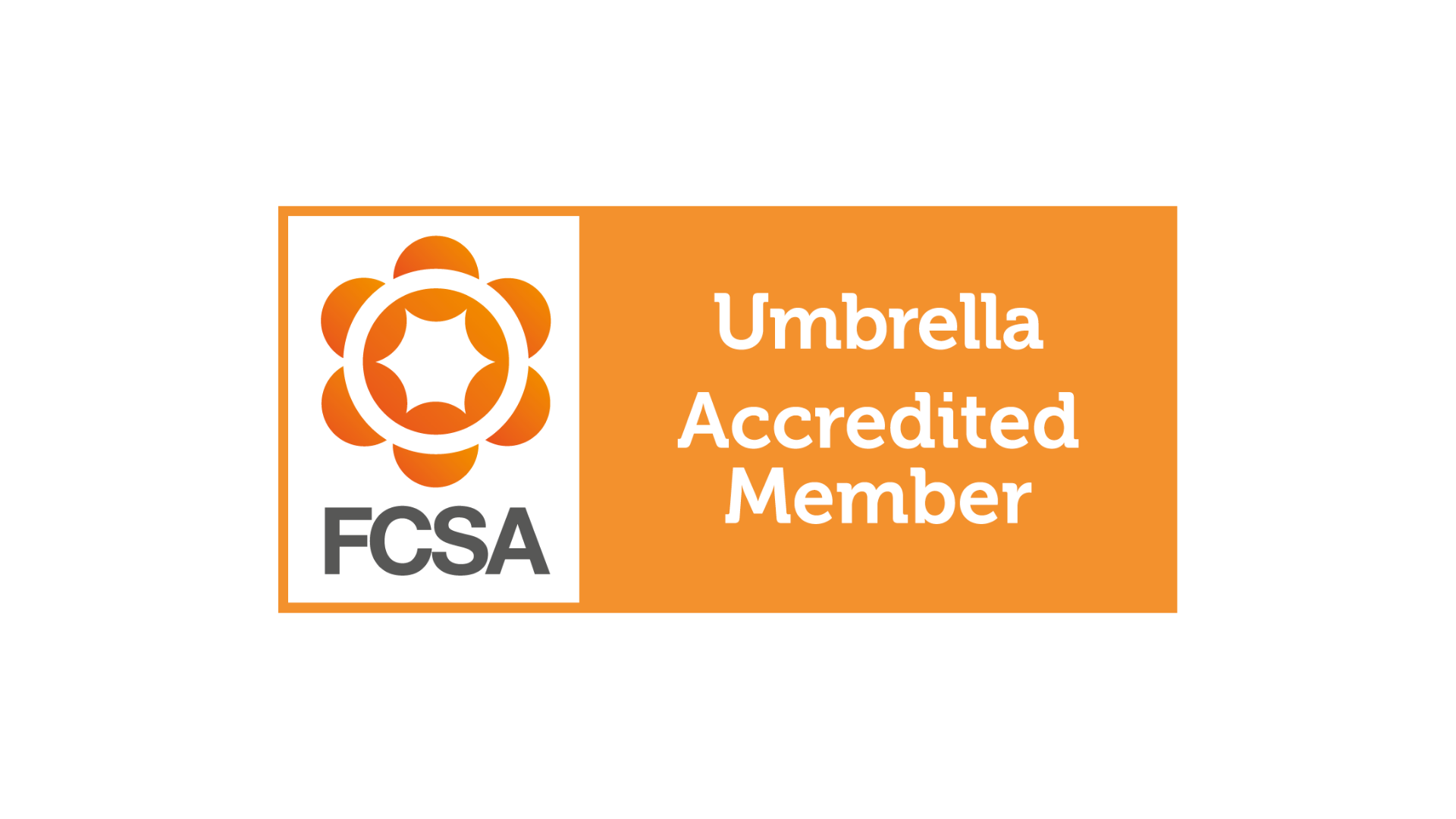
There are lots of well-known umbrella companies out there. When you’re searching for one, make sure you check for accreditation by the Freelancer & Contractor Services Association (FCSA), which shows that the umbrella company follows a strict code of conduct. Look out for this logo on their websites to make sure they’re legitimate:
Be sure to check out umbrella companies individually, as circumstances, services, and reputations can evolve over time.
Is an umbrella company right for you?
If you prefer simplicity, value employment rights, and are OK with potentially lower take-home pay, working through an umbrella company might be the right choice for you. Base your decision on your personal circumstances, preferences, and the nature of your contract work.
Action Checklist: Working through an umbrella company
Check off these tasks to get up to speed with the ins and outs of umbrella companies.
Working through an umbrella company
Next, we'll look at how to market yourself effectively to secure the best contracting opportunities.
